LIABILITY EXPOSURE ASSESSMENT
Beyond the Basic Origin
& Cause
Liability analysis that identifies risk before it becomes a lawsuit.
The Risk
Origin and cause tells you where
the fire started. Liability tells you
who's getting sued.
Building owner? Property manager? Contractor? Product manufacturer? Fire department? Multiple parties with contribution claims against each other?
Miss the liability issues early and you're defending claims that could have been avoided.
We assess whether you have exposure—identifying risk before it becomes litigation.
Scope of Analysis
What We Evaluate
Fire Spread Factors
Did the fire spread beyond expected patterns? Building construction deficiencies, code violations, or inadequate compartmentation?
Suppression Response
Access issues, sprinkler system failures, alarm problems, or hydrant availability. Did respons delays contribute to damage?
Life Safety Issues
Egress deficiencies, smoke alarm failures,
emergency lighting problems, or notification issues. Anything that put lives at risk.
Notice & Instructions
Product warnings, installation instructions,
maintenance requirements, and user manuals.
Were hazards properly communicated?
Code Compliance
Building and fire code deficiencies, permit issues, and inspection failures. We identify conditions that shouldn't have existed.

For Defense
Early identification of exposure allows strategic positioning and risk mitigation before claims are filed. We create documentation that supports your defense.
Scene Integrity
Access control prevents spoliation. Documentation captures conditions before
alteration. Photography establishes what was where before anyone touched anything.
Chain of Custody
From first response through final evidence collection, we track who accessed the scene, when, and what they did. Litigation-ready documentation.
Impact
Why It Matters
Common Liability Scenarios
Property Owner
Maintenance failures. Safeguard system neglect. Code violations. Tenant notification issues.
Contractor/Builder
Construction defects. Code violations. Material failures. Installation errors. Warranty issues.
Product Manufacturer
Design defects. Manufacturing defects. Warning inadequacies. Recall history. Similar incident patterns.
Fire Department
Response delays. Water supply problems. Suppression failures. Communication issues.
High Stakes
Life Safety Analysis
When fires involve fatalities or injuries, liability exposure intensifies. Life safety failures equal significant liability exposure. We identify these issues before opposing counsel does.
We evaluate:
Egress adequacy and occupant escape routes
Smoke alarm presence, operation, and placement
Emergency lighting and exit signage
Occupant notification systems and timing
Rescue accessibility and response adequacy
Spread & Suppression Investigation

Spread Evaluation:
Why did fire extend beyond area of origin? Construction deficiencies? Fire-rated assembly failures? Compartmentation problems?

Suppression Analysis:
Should sprinklers have controlled it? Alarm system issues? Water supply problems? System maintenance failures?
These findings determine whether property owners, contractors, or system installers share liability.
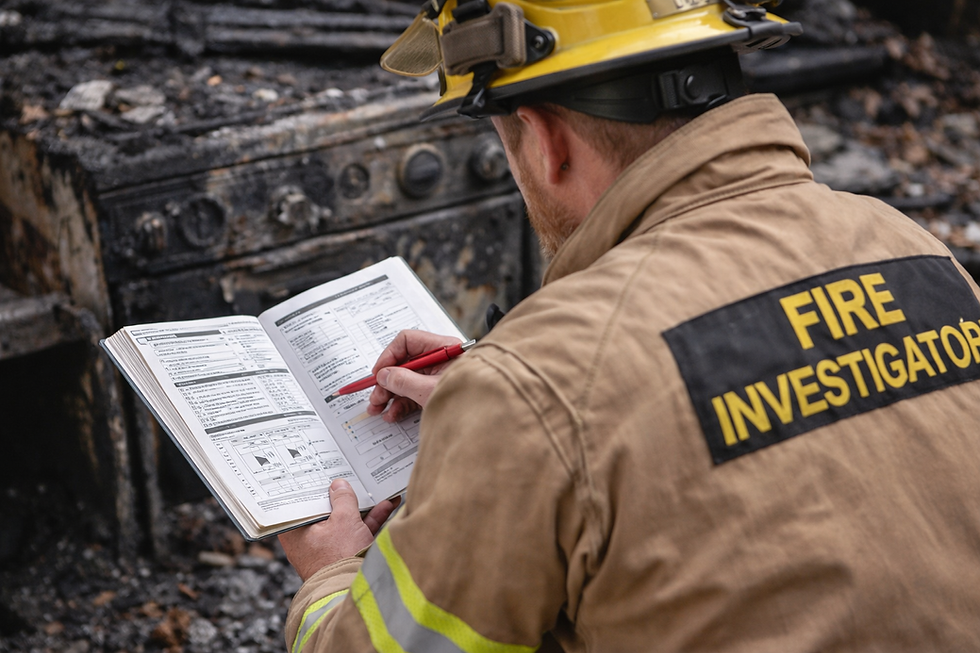
Notice & Instruction Review
Products don't get a pass just because they caused the fire.
Inadequate warnings or instructions = product liability exposure for the manufacturer. This becomes your subrogation target and their defence problem.
We Investigate:
Were warnings adequate?
Were installation instructions clear?
Were maintenance requirements communicated?
Were known hazards disclosed?
Strategic Recommendations
Liability assessment isn't academic. It's actionable. We provide analysis you can use—not just observations.
Exposure evaluation & risk quantification
Contribution target identification
Expert engagement recommendations
Documentation priorities for litigation
Integrated With Investigation
We don't add liability assessment at the end. It's evaluated throughout the investigation.
Scene examination includes code compliance checks. Evidence collection captures life safety components. Witness interviews address maintenance and notification. Reporting connects findings to liability concerns.
One investigation. Complete analysis.